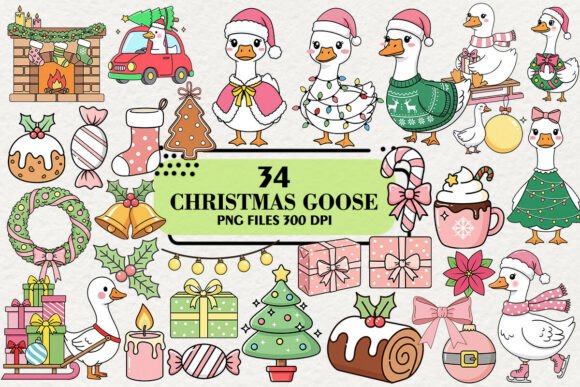
Cute Minimalist Christmas Goose Clipart Review
As an embroidery designer who spends more time than I care to admit staring at stitch files and testing thread samples, I have developed a specific set of standards for what makes a design actually work in the hoop. It is one thing to look good on a screen; it is another to translate cleanly into thread without losing its soul or clogging your machine. Recently, I evaluated Cute Minimalist Christmas Goose Clipart, an illustration that caught my eye not just for its seasonal charm, but for its potential utility in both personal crafting and small business merchandise.
This review is not about whether the goose looks "cute"—though it certainly does—but rather how this machine embroidery design performs when pushed through the practical filters of real-world production. If you are an Etsy seller, a craft business owner, or simply a maker looking to create high-quality personalized gift items, here is my honest assessment of using this asset in your workflow.
First Impressions: Mood and Visual Personality
The immediate appeal of Cute Minimalist Christmas Goose Clipart lies in its restraint. In a market saturated with overly complex, cluttered holiday designs, this piece stands out because it understands the power of negative space. The visual personality is warm, slightly whimsical, and undeniably festive without being loud. It creates a mood that feels cozy and approachable, which is exactly the vibe customers respond to when buying handmade goods during the holidays.
From a design perspective, the shape is clean. The lines are distinct enough to be interpreted clearly by digitizing software, yet simple enough to avoid the pitfalls of over-stitching. This is crucial for maintaining the integrity of the final finished product. When I first looked at the source file, I immediately thought of its application on soft goods—specifically items where the texture of the fabric should complement, not compete with, the design. It feels like a natural fit for holiday embroidery projects that aim for a boutique aesthetic rather than a mass-produced look.
Real-World Application: From Screen to Stitch
To truly understand the value of this embroidery project, we need to talk about where it shines. I put myself in the shoes of a small shop product creator planning a holiday collection. Here is how Cute Minimalist Christmas Goose Clipart translates across different mediums:
- Tote Bag Design: This is perhaps the strongest use case. Placing a minimalist goose on a canvas or cotton tote bag allows the design to breathe. The simplicity ensures that even after dozens of washes, the image remains crisp. It pairs beautifully with simple text like "Merry & Bright" or "Gooseberry Season," making it a versatile design assets addition for any commercial embroidery line.
- Sweatshirt Embroidery: For those creating cozy winter wear, this design works exceptionally well on chest placements or left-sleeve accents. The minimal detail level means you don’t need excessive stitch density, which keeps the garment comfortable against the skin. It elevates a basic sweatshirt into a custom apparel statement piece.
- Baby Embroidery: There is something inherently sweet about geese and baby items. This clipart is perfect for onesies, bibs, or nursery decor. The softness of the design aligns well with the delicate nature of baby fabrics. However, as noted later, fabric choice is critical here.
- Embroidered Patch: The clean outlines make this an excellent candidate for a patch design. Whether used as a badge on a denim jacket or a decorative element on a backpack, the defined edges allow for a clean satin stitch border that protects the inner details.
When evaluating this for printable mockup purposes or digital previews, the design holds up well. It conveys professionalism and attention to detail, which builds customer trust. Buyers can instantly visualize the final result, reducing hesitation and increasing engagement.
Technical Considerations and Stitch Clarity
While the artistic merit is high, the technical execution is where many designers stumble. Cute Minimalist Christmas Goose Clipart relies heavily on clear shapes. When converting this illustrations category asset into an embroidery file, the digitizer must pay close attention to the following:
- Stitch Type Selection: The body of the goose likely benefits from a combination of fill stitch for volume and satin stitch for defined edges. Small details, such as the beak or eyes, might require precise running stitch or carefully placed single stitches. Avoid over-complicating these areas; let the minimalism do the work.
- Thread Colors: Contrast is key. A white goose on a white shirt will disappear, no matter how good the design is. Test various thread colors against your target fabric. Metallic threads can add a festive touch to the scarf or hat often associated with the goose, but they must be used sparingly to maintain the minimalist aesthetic.
- Hoop Size: Ensure the hoop size accommodates the design with adequate margin. If the design is too large for a standard 4x4 hoop, you may need to split it or use a larger frame, which can impact stitching accuracy on curved surfaces.
I also recommend running the design through a black-and-white mockup simulation. This helps verify that the contrast between the fill areas and the background is sufficient. If the design relies on subtle shading, it may get lost in translation during the stitching process. Simplifying the color palette often results in a cleaner, more professional handmade product.
Where to Exercise Caution
No design is universal, and Cute Minimalist Christmas Goose Clipart has specific limitations that every creative entrepreneur should respect:
- Small Hoop Sizes: If you attempt to shrink this design down to fit a tiny hoop (like 2x2 inches), you risk losing the character of the goose. Tiny lettering or fine details may merge together, resulting in a muddy appearance. Keep the scale generous.
- Textured and Stretchy Fabrics: While great for stable cottons and linens, this design may struggle on highly textured fabrics like bouclé or stretchy knits unless proper stabilization is used. On stretchy materials, the tension can distort the clean lines, ruining the minimalist effect.
- Dense Stitch Areas: Although the design is minimal, if the digitization adds too much density, the fabric can pucker. This is particularly noticeable on thin fabrics or kitchen towel materials. Always test on scrap fabric first.
- Curved Surfaces: Applying this to caps or hats requires careful hooping techniques. The flat nature of the design assumes a relatively planar surface. Significant curvature can cause distortion in the center of the goose.
Practical Designer Notes for Success
Before committing this design to a full production run, I strongly advise taking the following steps:
Test on Scrap Fabric: Never skip this step. Stitch the design on the exact fabric you plan to sell or give. Check how the fabric texture interacts with the thread. Does the fabric show through? Is the stabilizer visible?
Check Licensing: As a digital embroidery file user, you must confirm the licensing terms. Are you allowed to sell finished products? Can you use this in a craft business context? Clarifying this before you start sewing saves legal headaches later.
Inspect Small Details: Zoom in on the digitized version. Are the corners sharp? Do the curves flow naturally? If the goose looks pixelated or jagged in the stitch preview, it will look worse in person. Adjust the underlay stitches if necessary to ensure stability.
Compare Backgrounds: Test the design on both light and dark backgrounds. A white goose might pop on navy blue but vanish on cream. Understanding these contrasts helps you offer better variety to your customers.
Final Verdict
Cute Minimalist Christmas Goose Clipart is a strong contender for anyone looking to add a touch of whimsical elegance to their holiday lineup. Its success hinges on proper digitization and thoughtful fabric selection. When executed correctly, it transforms from a simple digital image into a cherished personalized gift or a standout small shop product.
For the embroidery designer who values clarity, charm, and commercial viability, this design offers a solid foundation. It respects the medium, honors the season, and delivers a professional finish that buyers appreciate. Just remember: the magic isn't just in the design itself, but in how carefully you prepare it for the hoop. With the right prep, this goose is ready to fly—and sew.